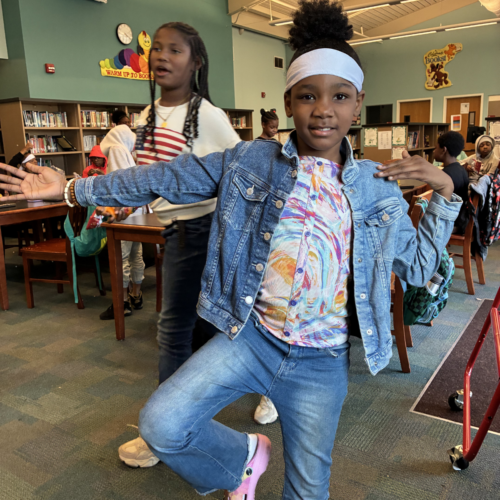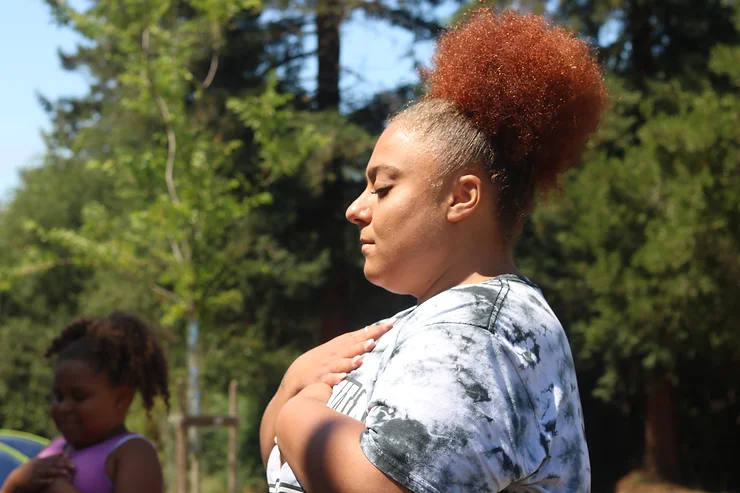
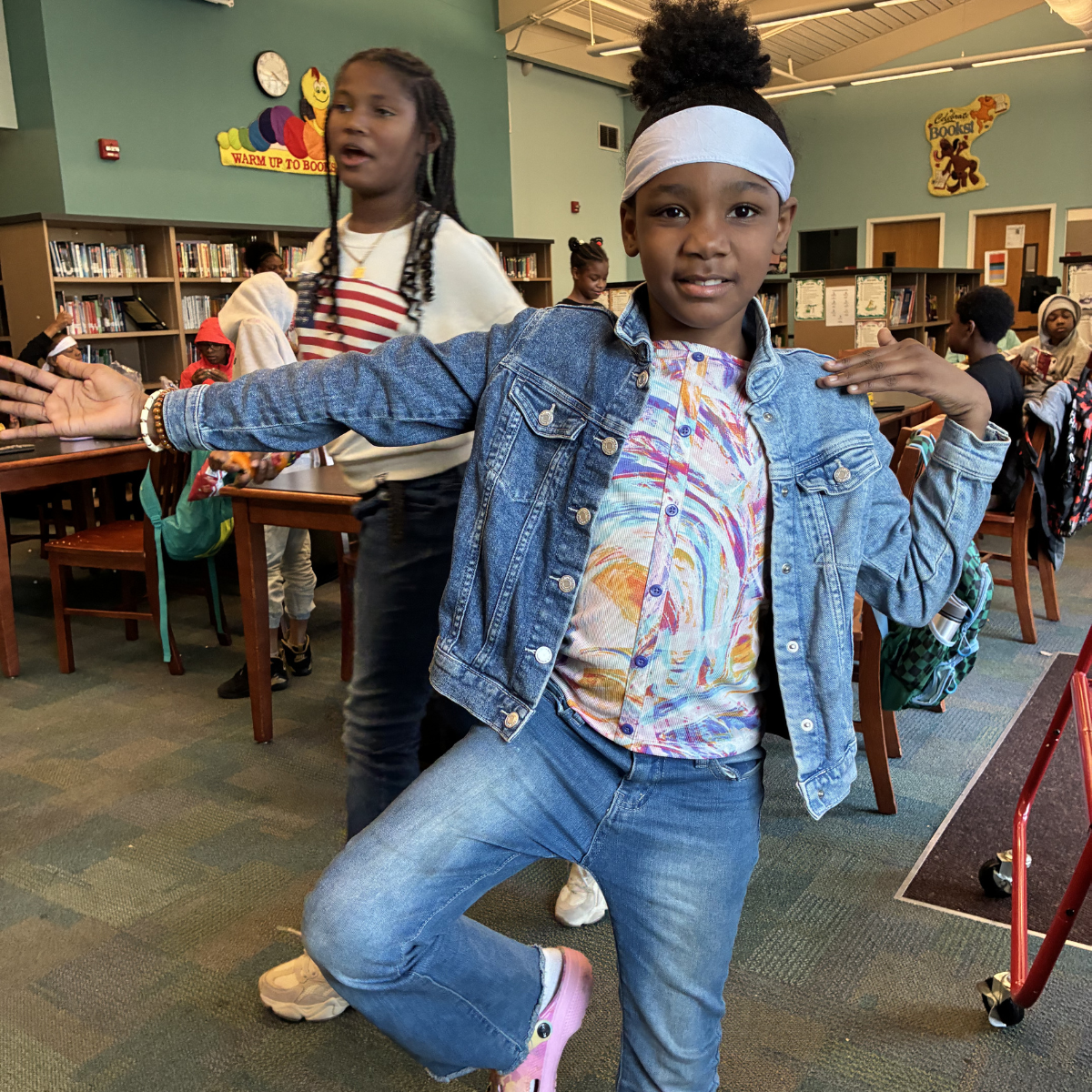
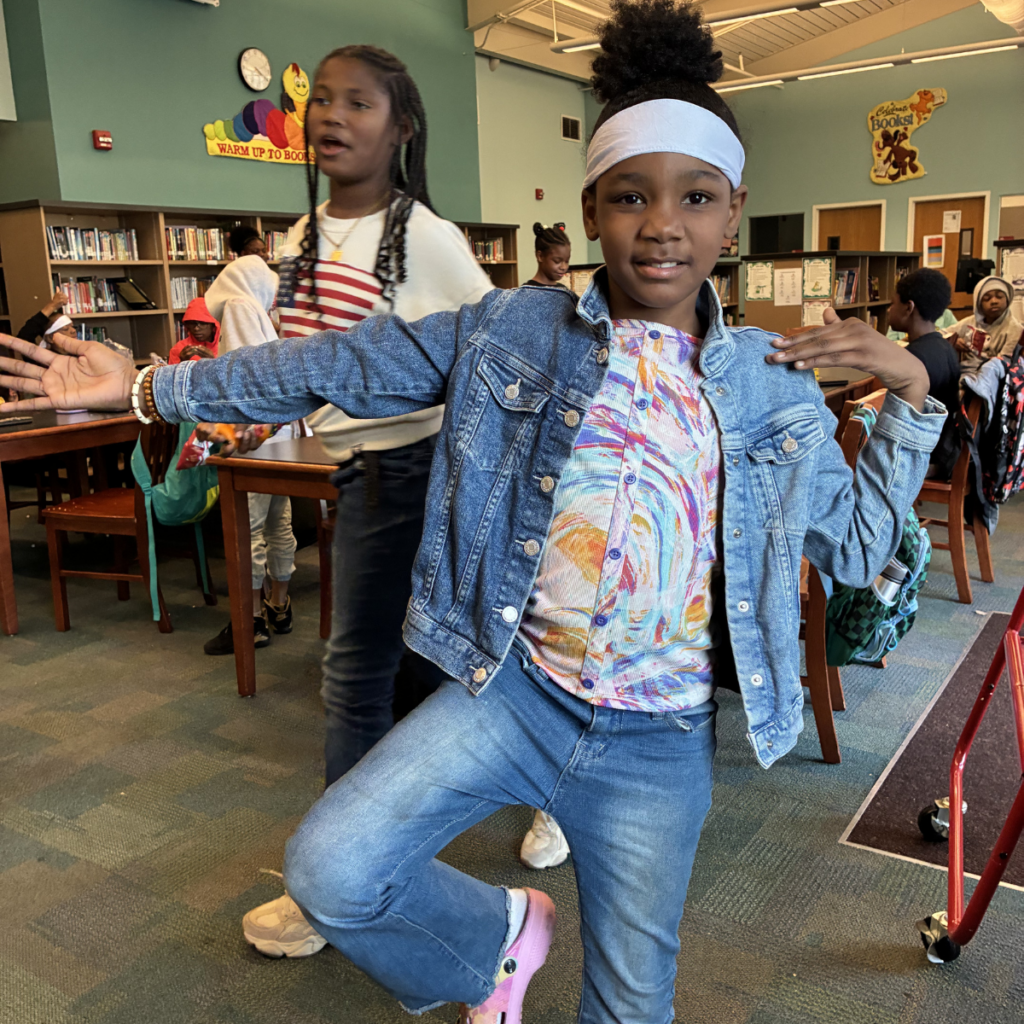
Student does yoga pose during mindfulness session at Nystrom Elementary in Richmond, California.
Mindfulness shouldn’t be a luxury. And it shouldn’t be something young people only experience when they’re in crisis.
Why do we wait until a young person is struggling before we give them tools to manage stress, understand their emotions, and care for their well-being?
At Inner City Bliss, we believe young people deserve those tools before the crisis.
They deserve opportunities to breathe, move, connect, reflect, and learn practices they can carry with them beyond the classroom.
This is especially important for Black and Brown young people navigating communities and environments where stress can be compounded by racism, economic hardship, community violence, resource inequities, and other challenges.
This isn’t about saying Black and Brown youth are broken or need to be fixed.
It’s about recognizing that young people navigating inequitable conditions deserve equitable access to wellness resources.
Young People Are Carrying a Lot
Adolescence is already a major period of physical, emotional, and social development. Young people are navigating academic pressure, relationships, social media, family responsibilities, and uncertainty about their futures.
For some, those pressures are compounded by experiences outside the classroom.
The CDC’s 2023 Youth Risk Behavior Survey found that 31.5% of U.S. high school students reported experiencing racism at school. The percentage was higher among Black students (45.9%) and Hispanic students (39.4%). Students who reported experiencing racism also showed higher levels of several indicators of poor mental health and suicide risk.
Stress doesn’t happen in a vacuum.
A young person may walk into a classroom carrying something that happened at home, in their neighborhood, online, or in a previous interaction at school.
So what happens if we give them tools to recognize what’s happening inside of them?
What happens if they learn how to pause before reacting?
What happens if they learn that movement can help them shift energy, that breathing can create space, and that they can check in with themselves before deciding what comes next?
That’s where mindfulness can become a powerful youth development tool.
Mindfulness Is More Than Sitting Still
At Inner City Bliss, mindfulness doesn’t always look like sitting quietly with your eyes closed.
Sometimes it looks like breathing.
Sometimes it looks like movement.
Sometimes it looks like checking in with your body.
Sometimes it looks like stepping away from a conflict.
Sometimes it looks like recognizing, “I’m getting overwhelmed,” and knowing what to do next.
And sometimes it looks like helping somebody else.
When Young People Teach Young People
During one of our school sessions, a student noticed that another student was upset.
Instead of simply getting an adult, the student used the stress-reduction flow they had learned through our programming and guided their peer through the practice.
Think about that for a moment.
A young person noticed another young person’s emotional state.
They recognized that something was wrong.
And they remembered a tool they had been taught.
Then they used that tool to support someone else.
That’s more than mindfulness.
That’s community care.
We want young people to understand that the practices they learn aren’t just something they do when an instructor is standing in front of them.
They can use them in real life.
With their friends.
With their families.
At school.
And when difficult moments show up.
“I’m Finding My Bliss.”
Then there was another moment.
I saw a student sitting quietly with his eyes closed, his fingers held in a mantra position.
I asked him:
“Hey, what are you doing?”
He looked at me and said:
“Finding my bliss.”
Well done.
That moment stayed with me.
Because the goal isn’t for a young person to become an expert at meditation.
The goal is for them to discover that they have the ability to create a moment of peace for themselves.
He wasn’t waiting for someone to tell him to practice.
He wasn’t in a formal mindfulness session.
He had taken something he learned and made it his own.
He was finding his bliss.
That’s the kind of ownership we want to cultivate.
The Research Is Encouraging
These community experiences are supported by a growing body of research.
A randomized controlled trial involving 300 fifth- through eighth-grade students in Baltimore City public schools found that students participating in an adapted mindfulness-based stress reduction program showed reductions in several measures related to psychological distress compared with students receiving health education. Nearly all participants were African American and most were from low-income households.
Another study involving predominantly African American urban boys found that students who participated in a school-based mindfulness program experienced less anxiety and rumination than students in the comparison group.
Research isn’t saying mindfulness is a cure-all.
And neither are we.
Mindfulness doesn’t erase racism.
It doesn’t solve poverty.
It doesn’t stop community violence.
It doesn’t replace therapy or behavioral health services.
We shouldn’t ask young people to meditate their way through systemic problems.
But mindfulness can be one tool within a larger ecosystem of support.
And that matters.
Why Wait Until Crisis?
Too often, wellness resources enter a young person’s life after something has already gone wrong.
A student becomes overwhelmed.
A conflict happens.
A young person starts struggling emotionally.
A teacher notices a change in behavior.
Then we ask:
“What support do they need?”
We should be asking that question earlier.
We teach young people how to read before they need to understand a college application.
We teach them math before they need to manage a household budget.
We teach physical education because we understand that caring for the body is part of growing up.
So why shouldn’t young people also learn how to recognize stress, regulate their emotions, pause, reflect, and reconnect?
Wellness shouldn’t begin at crisis.
It should begin with access.
This Is Why We Do the Work
At Inner City Bliss, we bring mindfulness-based programming into schools and community spaces because we believe young people deserve wellness resources where they already are.
They shouldn’t need to find a private wellness studio.
They shouldn’t need to wait until they’re struggling.
Their families shouldn’t need extra money to access basic practices that can support well-being.
We believe wellness should be culturally grounded, accessible, and connected to community.
Our approach brings together mindfulness, movement, restorative practice, and youth development to create spaces where young people can learn tools for their minds, bodies, relationships, and everyday lives.
And sometimes the impact shows up in the numbers.
Sometimes it shows up when a student helps another student breathe.
Sometimes it shows up when a young person closes their eyes, takes a moment for themselves, and says:
“I’m finding my bliss.”
Those moments matter.
Because we’re not just teaching young people what mindfulness is.
We’re helping them discover what they can do with it.
Our Young People Deserve More
Black and Brown young people deserve spaces where they can breathe, move, connect, reflect, and simply be.
They deserve access to practices that support their mind, body, and well-being.
They deserve those practices before they are in crisis.
And they deserve to carry them beyond the classroom.
Mindfulness shouldn’t be a luxury.
It should be part of how we care for our young people.
And we’re just getting started.
Bring Mindfulness to Your School or Community
Want to create more opportunities for young people to breathe, move, connect, and build wellness practices they can carry with them?